


The shift defining winning proposals in 2026
2026 marks a turning point for bid and proposal professionals. Buyer expectations are rising sharply, AI is reshaping both creation and evaluation, and visual design has moved from "nice-to-have" to a strategic differentiator. Winning bids now demand clarity, creativity, and credibility - delivered through proposals that are visually compelling, AI-ready and deeply aligned with client priorities.
This SP Perspective paper explores the top three trends shaping the future of proposals and what they mean for your ability to win. It also shares practical insights from SP's research and experience, highlighting how leading teams are adapting - and how SP can help you stay ahead.
Why 2026 is a turning point
The bid and proposal landscape is evolving faster than ever. Buyers are no longer satisfied with well-written documents; they expect immersive experiences, measurable outcomes and authentic engagement. At the same time, technology is transforming how proposals are created and evaluated. For bid teams, this means the old playbook won't cut it. To win in 2026, you need new strategies, new skills and new ways of working.
Trend 1: Visual & interactive proposals are now the standard
What's happening:
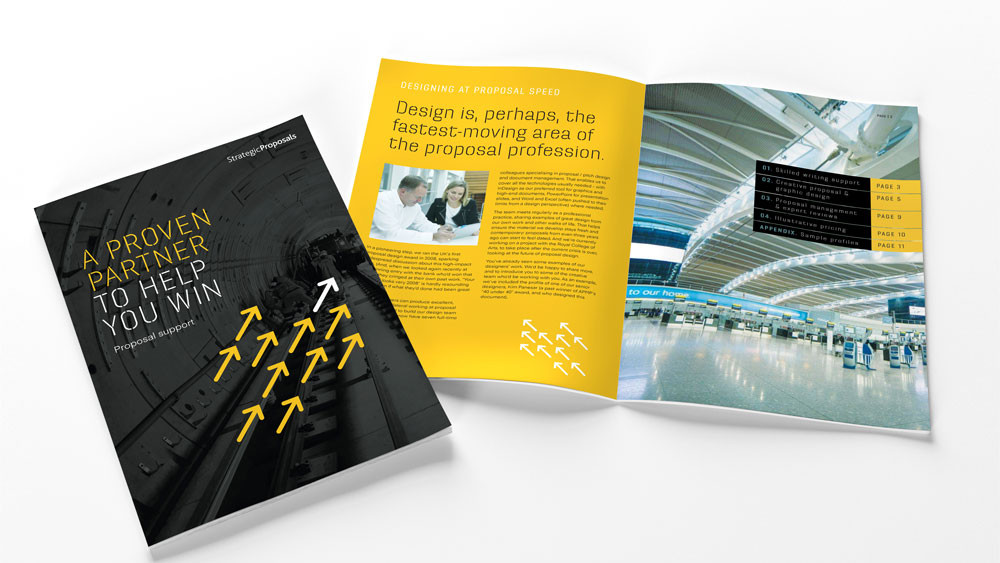
Proposals are becoming more than text — they're visual narratives. High-impact graphics, infographics and even interactive elements are now expected across sectors. Design is no longer an afterthought; it's a core component of proposal quality.
"But my customer asks me to fill in portal boxes, an Excel spreadsheet or a Word document with passive aggressive instructions." Winners are creating supporting executive summaries, bespoke brochures, animations and submission webpages that wrap around the compliant submission, show they want the business and tell their story through well-designed content.
Challenges
Formal RFP portals often restrict multimedia formats.
Winning moves
Embed design early:
Involve designers from day one to ensure visuals reinforce win themes.
Strategic visuals:
Use infographics for benefits, motion graphics for complex solutions, and always provide accessible alternatives.
Build capability:
Develop template libraries and train teams in basic design tools for speed and consistency. Maybe shift the focus from 'design basics' to 'hire a professional' - allowing you to get a step ahead and tap into additional resource and skillsets that you don't have in-house.
Trend 2: AI is reshaping both proposal creation and evaluation
What's happening
Challenges
Winning moves
Trend 3: Buyer expectations are rising sharply
What's happening
Need for hard evidence and cross-functional input needed for outcome-based solutions, puts pressure on content generation.
Winning moves
Implications on winning
Integrated design across bid, design and sales - consistently connecting your brands, and the customer's needs to your solution and the value you will deliver across the opportunity lifecycle.
Investment in design capability - bolstering in-house resource, outsourcing or hybrid models so you have access to the right skills, experience and tools.
A further shift from compliance to persuasion - every element must quickly reinforce why your solution is the best fit. Specific design techniques can elevate the impact your content has with the evaluators.
Strategic recommendations
1.
Audit your current proposals: Are they visually compelling, AI-ready, and client-centric?
2.
Build design into your process: Treat it as a strategic lever, not a last-minute fix.
3.
Upskill your team: AI, design, and ESG expertise are now essential.
4.
Partner with experts: SP can help you embed design excellence, streamline workflows, and prepare for the future.
2026 is here. The question isn't whether these trends will shape your bids – they already are. The real question is: Are you ready to win?
Ready to turn AI hype into business advantage? Download the AI Benchmarker and book a session with one of our experts.
